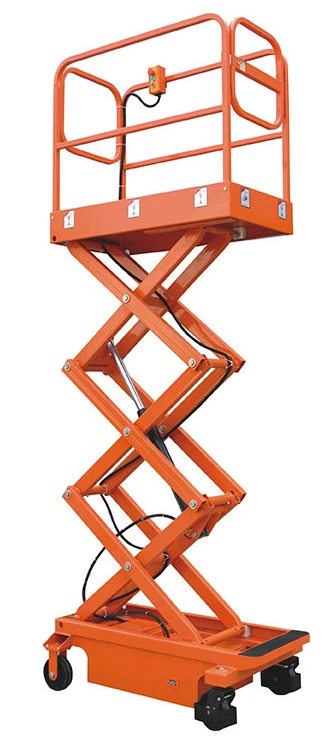
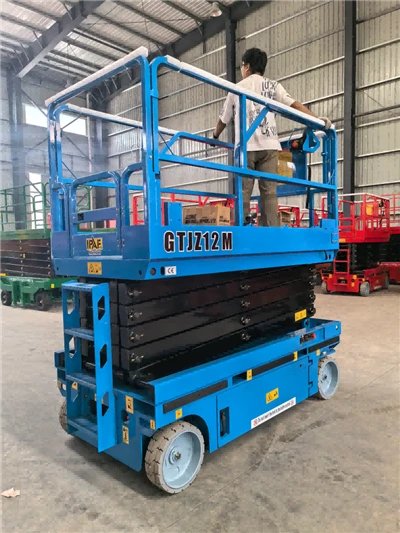
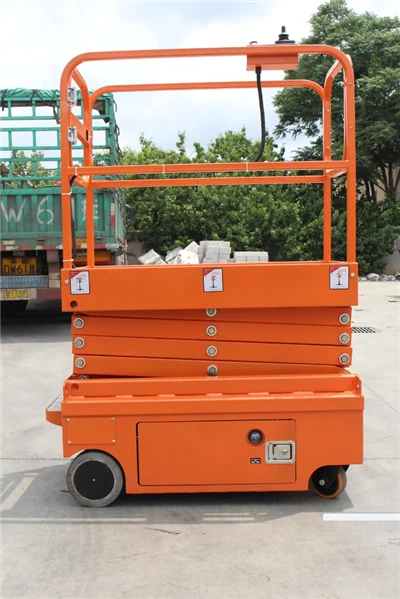
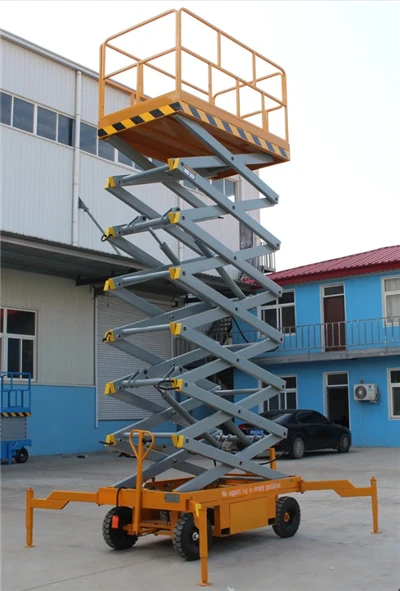
Maintaining a self-propelled electric scissor lift mainly involves following a structured schedule of daily checks, regular servicing, and proper storage to ensure safety, reliability, and a long service life. Skipping maintenance can lead to costly repairs and unsafe operating conditions.
Here is a comprehensive guide to maintaining your electric scissor lift.
1. Battery and Electrical System Care
The battery is the heart of an electric scissor lift. Proper care is vital.
Lead-Acid Batteries: Regularly check fluid levels and top off with distilled water to just below the fill tube. Keep terminals clean and free of corrosion.
General: For long-term storage (over a month), fully charge the batteries, turn off the main power switch, and recharge monthly to prevent degradation.
Electrical Wiring: Quarterly, inspect all wiring for fraying, corrosion, or loose connections, especially in the control panels and battery tray.
2. Hydraulic System Maintenance
The hydraulic system powers the lift's raising and lowering functions.
Fluid Checks: Daily, check for visible hydraulic fluid leaks around hoses, fittings, and cylinders. With the platform fully lowered, ensure the hydraulic oil level is adequate (often indicated on a sight glass).
Fluid Change: Plan to change the hydraulic oil and filter annually or per the manufacturer's hour-based recommendation.
3. Structural and Mechanical Inspection
The scissor arms and components endure significant stress.
Structural Integrity: Regularly inspect the scissor arms, welds, pins, and platform for any cracks, deformation, or damage.
Wear Pads and Rollers: Check the condition of the wear pads (often made of a slippery composite) and rollers that guide the scissor stack. Worn pads can affect stability.
Fasteners: Ensure all nuts, bolts, and retaining pins are present and properly torqued.
4. Tires, Brakes, and Controls
Tires: Inspect for cuts, damage, and proper inflation (if pneumatic). Solid, non-marking tires should be checked for excessive wear.
Brakes and Steering: Test the drive and brake functions daily. Ensure steering is responsive.
Safety Systems: Test all safety features, including the tilt sensor (pothole protection), limit switches, and the emergency lowering system.